




















Blog
Are Eco-Labelled Cleaning Products Worth Buying in Bulk? A Practical Guide for Australian Businesses


Australian businesses are under growing pressure to reduce environmental impact, cut operating costs and meet supplier compliance requests. It is no surprise that search interest in “bulk eco cleaning products” has spiked over the past year, with many organisations also seeking wholesale cleaning supplies that align with their sustainability goals. But do environmentally certified detergents, disinfectants, and consumables still deliver value when purchased by the carton, drum or pallet? Or does the premium price cancel out the sustainability gains?
This guide separates marketing spin from measurable benefit. We look at how eco labels are awarded in Australia, where bulk ordering amplifies (or erodes) those gains, and practical steps that facility managers, procurement teams and small-business owners can take when reviewing their cleaning cupboard. If you are simply chasing a reliable source of wholesale cleaning supplies, the discussion below will still help you decide whether an eco line belongs on your next purchase order.
1. What Counts as an Eco-Label in Australia?
Before diving into bulk economics, it helps to clarify which stamps and badges genuinely prove a product’s lower environmental footprint.
1.1 Independent vs Manufacturer-Declared Claims
Any brand can print “green” or “earth-friendly” on a bottle. Independent third-party certification, however, must satisfy published criteria, annual auditing and complaint resolution processes. The most recognised programs for commercial cleaning chemicals include:
- GECA (Good Environmental Choice Australia)
- Environmental Choice New Zealand (accepted in many Australian tenders)
- EU Ecolabel (occasionally appears on imported lines)
1.2 How Certification Works
Certifiers typically assess:
- Toxicity and biodegradability of ingredients
- Packaging recyclability and concentration ratios
- Provenance of raw materials
- Worker health and safety
They also cap volatile organic compounds (VOCs) and prohibit certain surfactants or fragrances.
For a detailed overview of scheme requirements, consult the Australian Government eco-label guidance.
1.3 Quick Reference Table
The table below summarises the key differences between common certifiers and in-house claims.
| Eco Label / Claim | Verified By Third Party? | Typical Audit Frequency | Accepted in Australian Tenders? |
| GECA | Yes | Annual recertification | Widely accepted |
| EU Ecolabel | Yes | Every 3-5 years | Often accepted for imported lines |
| Self-declared “green” | No | None | Rarely accepted |
| Biodegradable symbol only | Sometimes | Varies | Limited |
Independent certification provides an audit trail. That matters when your clients, insurers or compliance documents need evidence beyond a marketing slogan.
2. Bulk Ordering vs Smaller Packs: Where the Maths Changes
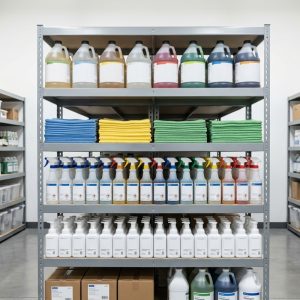
Buying by the carton or drum can slash per-litre costs, but storage, spoilage and handling must be factored in. The following considerations determine whether bulk eco chemicals still make sense.
2.1 Shelf Life and Potency
Eco products often rely on plant-based surfactants or lower preservative loads. That can shorten shelf life compared with conventional lines. Check the manufacturer’s unopened and opened-container expiry. If you cannot cycle through a 20-litre drum within that time, the wastage cancels the savings.
2.2 Storage Conditions
Temperature swings in a shipping container or warehouse corner can separate natural emulsions or degrade fragrance oils. Air-conditioned storage may be needed, particularly in the Top End summer.
2.3 Dilution Systems
Many certified lines are supplied as concentrates that require an accurate dispensing unit. Mis-dilution leads to poor results, rework and higher water use. If staff still “glug and guess,” factor in the cost of wall-mounted or portable dosing gear.
2.4 Freight Weight vs Plastic Reduction
A 5-litre bottle weighs less than a 25-litre drum but uses more plastic per litre. The sustainability advantage of bulk drums shows up only when returnable or recyclable containers are used and transport routes are optimised.
3. Cost-Per-Use: How to Run the Numbers
Sustainability officers may ask for a cost-per-use comparison rather than simple shelf price. Use the steps below.
- Record concentrate price per litre.
- Note recommended dilution ratio (for example, 1:80).
- Calculate usable litres: 1 L ÷ (1/81) = 81 L ready-to-use.
- Divide total litres by typical spray bottle or mop bucket volume to find treatment count.
- Factor in dispensing equipment amortisation.
By adding disposal fees for empty containers and potential EPA levy savings when less chemical ends up in trade waste, the eco option may look friendlier on the balance sheet than first thought.
4. Sustainability Claims vs Real-World Outcomes
Buying eco in bulk delivers the biggest environmental win only when life-cycle thinking extends beyond the loading dock.
4.1 Upstream Benefits
Manufacturers with GECA certification must prove energy and water savings during production, so every drum already embodies a smaller carbon footprint.
4.2 Downstream Impact
Wastewater discharge limits for phosphates, ammonia and surfactants vary by local authority. Plant-based chemicals can reduce trade waste charges or grease trap pump-out frequency.
4.3 Circular Packaging
Returnable drum programs close the loop on plastic. Ask suppliers whether drums are:
- Rinsed and refilled
- Recycled under a stewardship scheme
- Simply landfilled (green credentials end here)
4.4 Staff Health and Safety
Lower VOC and non-chlorinated formulas reduce respiratory complaints and dermatitis reports. Fewer sick days contribute to hidden savings.
5. Common Mistakes to Avoid When Switching to Bulk Eco Lines
| Mistake | Why It Happens | Safer Approach |
| Assuming all eco labels are equal | Certification rules differ widely | Verify credentials and read criteria summaries |
| Ordering pallets before testing | Pressure to hit free-freight minimums | Pilot one carton in each cleaning scenario first |
| Ignoring chemical compatibility | Mixing residual conventional sanitiser with plant acids can create odours | Flush lines and bottles before changeover |
| Skipping staff training | Teams think eco = weak, so they overuse product | Provide dilution charts and measure results |
| Storing in direct sun | Natural dyes fade, fragrance oils oxidise | Keep drums in a shaded, cool area |
6. Decision Framework: Is Bulk Eco Right for Your Facility?
The following table helps facilities of different sizes decide.
| Scenario | Typical Facility Size | Bulk Eco-Label Viability | Key Watch-Outs |
| Corporate office with day cleaners | 5,000+ m² | High | Staff training on dilution |
| Aged-care home with sensitive residents | 100+ beds | Moderate to High | Allergen-free fragrance selection |
| Multi-site retail chain | 10–50 outlets | High if the supply chain is centralised | Drum freight logistics |
| Small café | <250 m² | Low | Shelf life may exceed usage rate |
7. What About Concentrated Conventional Options?
If you are weighing eco drums against traditional super concentrate systems, our Cleaning Chemicals Selection Guide explains the performance and safety trade-offs for each surface type. Reviewing both resources side by side will help you map a mixed inventory that balances efficacy, cost and environmental profile.
8. Implementation Checklist for Australian Buyers
Tick off these steps before issuing a bulk order:
- Confirm the certification scheme meets your client’s or government tender requirements.
- Audit current chemical usage volumes to ensure drums will turn over before expiry.
- Check storage temperature and bunding compliance per state EPA guidelines.
- Budget for or lease automatic dilution units compatible with the product.
- Arrange a returnable drum collection service if available.
- Train cleaning staff on the new system and update Safety Data Sheets on site.
- Monitor cleaning performance and trade waste readings for six weeks.
- Document any reduced sick leave, odour complaints or slips for ROI reporting.
9. Frequently Asked Questions
1. Do eco-labelled disinfectants kill germs as effectively as traditional chlorine products?
Accredited eco disinfectants must still meet Australian regulatory standards for microbial kill rates. They use alternative active ingredients, such as hydrogen peroxide or quaternary ammonium compounds with lower toxicity profiles. Always follow the stated contact time and surface compatibility notes.
2. Will eco drums need separate storage from my existing chemicals?
Yes, segregate acids from alkalis and keep oxidisers away from organics. Eco certification does not override Dangerous Goods classifications. Check the product SDS.
3. Is the cost of wall-mounted dilution equipment justified?
In most medium to large facilities, yes. Accurate dosing can cut overuse by 30 per cent or more, quickly covering the hardware cost and ensuring certification criteria on water use are met.
4. Can I refill smaller spray bottles from the drum?
You can, but only with labelled, chemical-resistant bottles that match the product SDS. Never mix residues from different products.
5. Do local councils mandate eco-labelled products in public facilities?
Requirements vary. Some councils specify GECA or equivalent certification in cleaning tenders, while others focus on biodegradable packaging. Review tender documents carefully.
Final Thoughts
Eco-labelled cleaning products bought in bulk can deliver more than green optics. When shelf life, storage and correct dilution are managed, they cut packaging waste, lessen staff exposure to harsh chemicals and may even lower trade waste fees. The key is to treat certification as one factor in a broader cost-per-use and operational risk equation. Pilot the range, track performance metrics, and adjust order volumes before locking in annual supply contracts. In a market where clients and regulators increasingly ask for evidence, that measured approach turns sustainability into a competitive advantage rather than a marketing promise.