




















Blog

Streaky windows are one of the most frustrating jobs in commercial cleaning. You wipe, you buff, and then the light hits the glass to reveal every smear you thought you had cleared. The good news is that streak-free glass comes down to technique and the right tool, not extra elbow grease. At AC Cleaning Supplies, we help cleaners and facilities teams across Australia get professional results with the correct kit. This guide walks you through the squeegee method the pros use, how to choose a squeegee, and why your cleaning solution matters just as much as your action.
| Quick answer: To use a window squeegee for streak-free windows, wet the glass with a diluted glass cleaner, wipe the squeegee blade with a clean cloth, then pull it down (or in an overlapping S-pattern) from top to bottom in one smooth stroke, drying the blade after every pass. Finish the edges with a microfibre cloth. |
What you need before you start
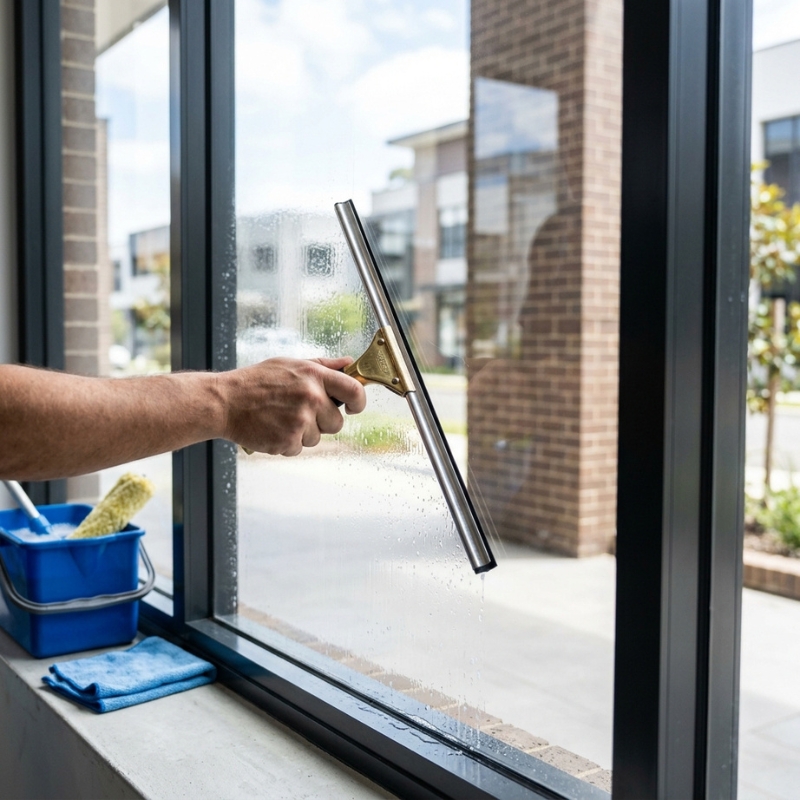
A professional finish starts with the right kit, and there is not much to it. You will need a quality squeegee, a clean microfibre cloth, a bucket and a suitable cleaning solution. Squeegees come in a range of channel widths, commonly from around 25cm up to 45cm, so you can match the blade to the pane in front of you. A clean, lint-free microfibre cloth handles the edges and any final touch-ups, while the bucket holds your diluted solution. On very dirty glass, an applicator or scrubbing sleeve to loosen grime before you squeegee will save you redoing the pane.
Two things make the biggest difference to the result: the condition of your blade and the quality of your solution. A nicked or worn rubber blade drags and leaves lines no matter how good your technique is, so replace blades before they fail. Purpose-made window cleaning chemicals are formulated to break down grime and dry cleanly, which is why they outperform a splash of dishwashing liquid on glass.
Step-by-step: the professional squeegee technique
Once your glass is prepped, the method is simple and repeatable. Work from top to bottom so you are always moving into dry glass, and keep your strokes overlapping.
Step 1: Prep and wet the glass
Dust or brush off any loose grit first so you are not grinding it across the glass. Apply your diluted solution generously with a cloth, sponge or applicator until the whole pane is wet. The common mistake here is using too little solution, which lets the blade skip and chatter instead of gliding.
Step 2: The straight pull versus the S-pattern
For small or narrow panes, a straight pull works well. Start at the top edge, keep the blade flat against the glass, and draw it down in one steady stroke. For larger windows, the S-pattern is faster and leaves fewer lines: start at a top corner and pull across and down in a continuous S shape without lifting the blade. Use the straight pull for control on tight glass, and the S-pattern to cover big panes quickly.
Step 3: Wipe the blade after every stroke
Carry a clean cloth in your spare hand and wipe the rubber blade after every single pass. A wet or dirty blade redeposits water and grime, which is the number one cause of streaks. This one habit is what separates a professional finish from an amateur one.
Step 4: Detail the edges and sills
The squeegee handles the middle of the pane, but the edges need a final wipe. Run a dry microfibre cloth around the perimeter to lift the last beads of water, then dry the sill so drips do not run back onto clean glass. Overlap each squeegee stroke by around 5cm so you never leave an untouched strip between passes.
Choosing the right squeegee (size, blade and handle)
The right squeegee makes the job quicker and the finish better. Match the channel width to the glass you clean most: a wider blade covers large panes in fewer strokes, while a narrower blade gives you control on small or divided windows. Many commercial cleaners keep two widths so they are ready for either.
Blades come as fixed rubber or replaceable inserts. Replaceable rubber is the practical choice for commercial use because you can swap a worn blade in seconds rather than binning the whole tool, so keep spare rubber on hand and a nicked blade never holds up a job.
For high or hard-to-reach glass, an extension pole lets you work safely from the ground and cover more area without a ladder. Choose a handle that locks firmly to the pole so the head does not wobble mid-stroke. A comfortable grip and a head that pivots slightly both help you keep the blade flat across the whole pane, which is what keeps the finish even.
Why streaks happen (and how the right chemical helps)
If you are still getting streaks, the cause is almost always one of a handful of things: a dirty or worn blade, too much or too little solution, the wrong cloth, or cleaning in direct sun so the glass dries before you can finish. Work through them in order and the problem usually disappears.
Your cleaning solution plays a bigger role than most people expect. Household sprays can leave a residue that flashes off unevenly and shows up as haze. commercial-grade glass cleaners are built to cut through grease and mineral film and then evaporate cleanly, so the glass dries clear. On hot days, work in shade or start early before the sun hits the glass. In hard-water areas, mineral spots can bake onto the glass, so rinse and squeegee promptly rather than letting droplets dry in place.
Frequently asked questions
How do I stop my squeegee from leaving streaks?
Wipe the blade with a clean cloth after every stroke, and check the rubber for nicks or wear, because a dirty or damaged blade is the most common cause of streaks. Use enough solution to keep the glass wet, overlap your strokes, and finish the edges with a dry microfibre cloth.
What size window squeegee should I buy?
Match the channel width to your glass. A wider blade of around 35cm to 45cm suits large panes and shopfronts, while a narrower blade of 25cm to 30cm gives more control on small or divided windows. Many commercial cleaners keep two sizes to cover both.
Can I use dish soap instead of window cleaning chemical?
You can, but it is not ideal. Dishwashing liquid can leave a residue that streaks or hazes as it dries. A purpose-made glass or window cleaning chemical is formulated to cut grime and evaporate cleanly, so it usually gives a clearer, more reliable finish on commercial glass.
How often should commercial windows be cleaned?
It depends on the site. High-traffic shopfronts and food venues often need weekly or fortnightly cleaning to stay presentable, while quieter office glass may only need monthly attention. Exposure to dust, traffic and weather all shorten the interval, so set a schedule that suits your location.
Final thoughts
Streak-free glass really does come down to a clean blade, enough solution and an overlapping stroke worked from top to bottom. Get those right, and the rest follows. When you are ready to restock, it pays to buy your consumables in volume, and bulk cleaning supplies keep busy sites moving without last-minute runs to the shops.
| Ready to order? Browse AC Cleaning Supplies’ window cleaning and smooth-surface range for bulk, commercial-grade options delivered Australia-wide. |