




















Blog
Jumbo vs Standard Toilet Roll Systems: Which Suits Your Washroom

Choosing between a jumbo and a standard toilet roll system is one of those decisions that looks trivial and then quietly shapes your cleaning labour for years. The roll itself is the small part. What actually matters is how often someone has to refill the dispenser, how much paper goes missing, and whether the system matches the number of people using the washroom each day. Get the match right, and the washroom looks after itself between cleans. Get it wrong and you are either refilling constantly or paying for capacity you never use.
This guide walks through the real differences between the two systems, how to work out which suits your site, and what to check before you switch. If you are weighing up options, it is worth browsing the full range of toilet paper and dispensers alongside this, so you can see the formats as you read.
Capacity and refill frequency: the core difference
The fundamental split between the two systems is how much paper each dispenser holds and, as a direct result, how often it needs topping up.
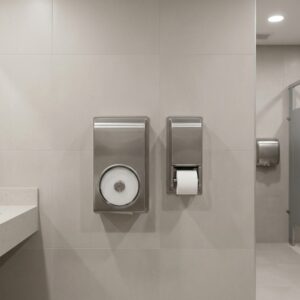
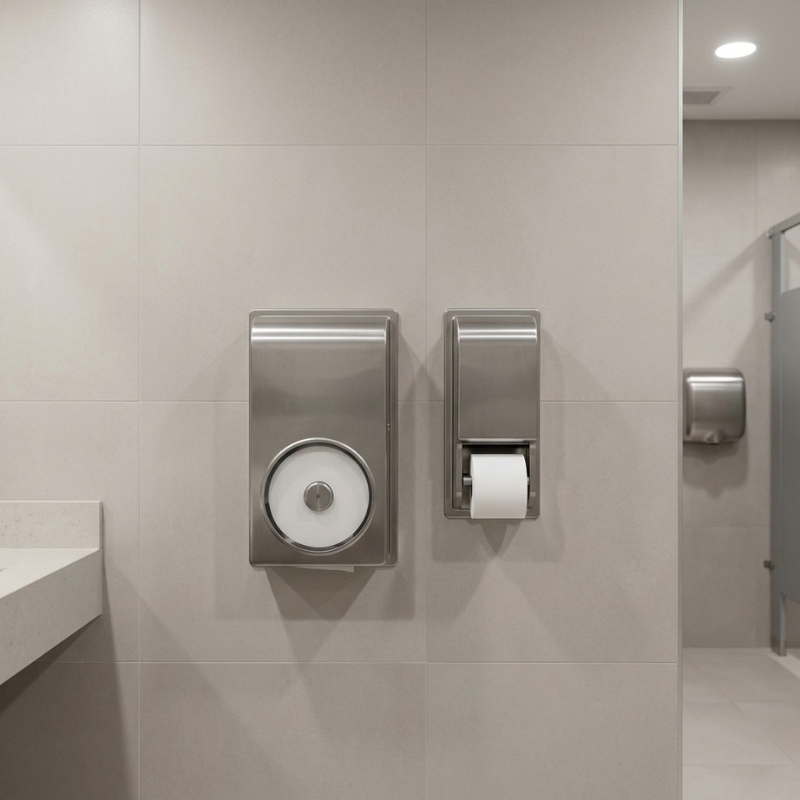
A standard roll is the familiar domestic-style roll, and in a dispenser it holds a modest amount of paper. In a low-traffic setting that is fine, but in a busy washroom it empties quickly, which means frequent checks and refills through the day. A jumbo system uses a much larger roll, often several times the length, held in a dedicated dispenser. The whole point of it is to hold far more paper so it needs attention far less often.
That difference drives the labour cost more than the paper cost does. Every refill is a staff member walking to the washroom, unlocking the dispenser, loading paper and moving on. In a building with several washrooms, those minutes add up across a week. A jumbo system spreads that labour out by holding more between refills, which is why it tends to win in anything busier than a quiet office.
Matching the system to washroom traffic
The honest way to choose is to start with how many people use the washroom, not with the paper.
For a low-traffic washroom, a small office, a back-of-house staff toilet, a site used by a handful of people, a standard roll system is usually plenty. It refills slowly, the dispensers are compact, and you are not paying for capacity you do not need. Where a standard system struggles is the moment traffic climbs.
For a high-traffic washroom, a public amenity, a busy shopping or hospitality site, a large workplace or anywhere with a steady flow through the day, a jumbo toilet roll dispenser earns its place. It holds enough to get through peak periods without running out, which matters most in exactly the washrooms where an empty dispenser is noticed fastest. The rule of thumb is simple: the busier the washroom, the more a jumbo system pays off, because the saved refills and the reduced risk of running dry outweigh the larger dispenser on the wall.
Working out rolls per week for your headcount
You do not need to guess at supply. A rough planning estimate is enough to size your order and your refill schedule, and it starts with headcount.
Take the number of people using the washroom in a day, and account for how many days a week the site operates. From there you can estimate daily usage and scale it to a week, then match that figure against the capacity of the roll you are considering. A jumbo roll holding several times a standard roll’s length will cover that weekly demand in far fewer refills, which is the number that actually tells you how much staff time the system will cost you.
Treat any figure you reach as a planning guide rather than a precise promise, because real usage varies with the site, the season and the type of visitor. The value of the exercise is relative, not exact: it tells you whether a washroom needs checking daily or can safely run longer between refills, and that is what decides the system.
Locks, keys and controlling usage
One practical consideration that is easy to overlook is security, and it matters more in some settings than others.
Most commercial dispensers, jumbo systems especially, come with a lock and key so the paper cannot be removed or tampered with. In a public or high-traffic washroom this is worth having, because an unlocked dispenser invites both theft of whole rolls and the kind of over-pulling that empties a dispenser long before it should. A locked system also controls waste, since users take what they need rather than helping themselves to the roll. In a secure, staff-only washroom the lock matters less, but it is still a sensible default on a shared or public site. When you compare dispensers, check whether the lock is keyed, how the key is managed, and whether all your dispensers can run on the same key to save your cleaners carrying a bunch of them.
Switching systems: what to check first
If you are moving from one system to the other, a few checks save you from an awkward surprise after the dispensers are already on the wall.
- Dispenser and roll compatibility. Jumbo rolls need jumbo dispensers, and standard rolls will not fit them, so the dispenser and the paper have to be matched as a system, not bought separately and hoped to fit.
- Wall space and mounting. Jumbo dispensers are larger, so confirm there is room on the wall and that the mounting suits your washroom layout before you commit.
- Core size. Rolls come with different core sizes, so check the roll core matches the spindle in the dispenser you are buying.
- Transition stock. When you switch, you will have leftover paper for the old system, so plan to run it down or redeploy it rather than letting it go to waste.
As a Licenced Supplier, A C Cleaning Supplies can help you match dispensers and refills so the system works as one from day one. Size the system to your traffic, check the fit before you switch, and the washroom quietly takes care of itself between cleans.