




















Blog
Choosing the Right Cleaning Glove Size and Thickness to Keep Work Moving

Why glove fit matters more than you think
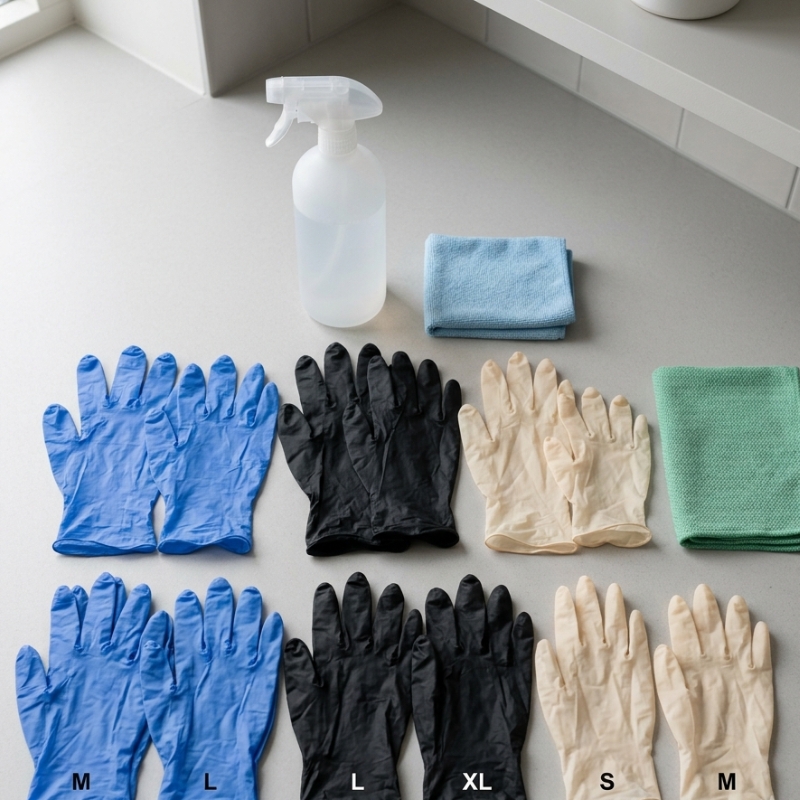
A glove that bunches at the fingertips slows every wipe-down, doubles the chance of a dropped spray bottle and leaves staff frustrated before morning tea. One that’s too tight tears as soon as someone twists a nozzle. Either situation costs minutes across every shift and chips away at productivity targets. Selecting the correct fit is therefore less about comfort and more about keeping tasks flowing. AC Cleaning Supplies’ full cleaning gloves range is labelled to Australian sizing conventions, yet a quick refresher on how sizing works prevents guesswork during the next bulk order.
Decoding glove sizing for Australian workers
Glove size is determined by the widest part of the hand—normally across the knuckles—measured in centimetres. Manufacturers then translate that figure to alpha sizes (S, M, L, XL) or numerical codes. The conversion is not identical between brands, so relying on a staff member’s “usual” size can backfire when switching suppliers.
Three practical steps keep the process smooth:
- Measure hands at the end of a shift when they’re slightly warm and expanded.
- Round up to the nearest centimetre to avoid a tight fit that strains seams.
- Check the brand’s chart rather than assuming a medium is always 8–9 cm.
Most glove cartons carry a sizing guide, but printing it onto a laminated card and taping it above the PPE station saves time for new hires. A properly sized glove should sit flush against the palm without visible stretching, and there should be just enough finger length to pinch the tip between thumb and forefinger.
Thickness: balancing dexterity and durability
Material thickness, expressed in millimetres or “mil”, dictates how well a glove resists punctures, detergents and repeated flexing. Go too thin and workers feel every handle and button but risk splitting the cuff. Pick a heavy-duty option and they may struggle to grip small trigger heads. A middle ground exists—if you match thickness to the task.
| Approx. thickness | Typical use cases | Dexterity | Tear risk |
| 3–4 mil (0.08–0.10 mm) | Light janitorial, quick task changes | High | Higher |
| 5–6 mil (0.13–0.15 mm) | General commercial cleaning, chemical spray and wipe | Moderate | Low |
| 7–8 mil (0.18–0.20 mm) | Heavy degreasing, sharp-edge handling | Lower | Lowest |
Cutting corners by buying one thickness for every role often backfires. Team leaders in mixed-duty environments, such as shopping centre maintenance, usually stock two thicknesses: a lighter glove for restroom mirrors and a sturdier option for food-court grease traps. This approach halves the number of torn gloves reported each month while keeping tactile feedback where it’s needed.
The same mindset applies to materials. Nitrile remains the all-rounder in Australian facilities because it stands up to quats and bleach yet still flexes. Latex delivers superior stretch but can spark allergies, and vinyl is cost-effective for dry dusting though less resistant to solvents. Matching thickness and material rather than choosing one variable in isolation prevents call-backs later.
Mid-order doubts often circle back to cost. Our recent article on bulk cleaning chemical savings outlines the broader picture: buying the correct-spec glove reduces wasted minutes, which quickly eclipses the few cents saved on a thinner option.
Quick field tests before a full order
Spec sheets look convincing, yet nothing beats a 15-minute trial in real working conditions. A simple four-point test covers the essentials and avoids pallet-load regrets:
Grip check
Hand a worker a wet mop handle and ask them to twist hard. Any slip signals the surface coating is too smooth or the glove too loose.
Chemical splash demo
Dip gloved fingers into the strongest detergent used on site for the recommended contact time. Look for swelling or colour change, early signs of degradation.
Fine movement task
Ask the same staff member to change a spray nozzle insert. Struggle here indicates the glove is either too thick or fingers are over-long.
Removal repeatability
Time how long it takes to pull the gloves off and on three times. Cabling or zipper catches suggest cuffs are too narrow or tacky.
Feedback from line staff often contradicts management assumptions. Supervisors tend to favour thicker gloves, while operators doing repetitive wiping crave thinner pairs. Balancing both viewpoints leads to fewer unofficial workarounds (two pairs at once, or cutting off fingertips) that silently drive up usage.
Final check: matching size, thickness and job
Once a business locks in the right specifications, consistency is critical. Mixing glove models on the same trolley confuses shift workers and inflates wastage as they open multiple boxes to find a familiar feel. Colour-coding by task—blue for bathrooms, black for waste areas—remains the simplest visual cue and aligns with Safe Work Australia’s advice on avoiding cross-contamination here.
Confirm the glove spec on new jobs before quoting; a school cleaning contract full of stainless-steel fixtures chews through thin nitrile faster than vinyl on office desks. Build the expected tear rate into ordering schedules rather than reacting to empty sleeves mid-shift.
Choosing the correct glove size and thickness may feel mundane compared with sprayer selection or floor-pad choice, yet it touches every corner of a cleaner’s day. Measure hands, pick task-appropriate thickness, run a brief field test, and stick with a clear colour system. The payoff appears not only in lower glove spend but in shifts that run on time with fewer “just grab another pair” interruptions.