




















Blog
Bulk vs On-Demand Cleaning Supplies: Which Stocking Strategy Is Best in 2026?


Running out of essential cleaning supplies can disrupt daily operations, whether you manage an office, restaurant, school, medical clinic or commercial cleaning business. At the same time, ordering more products than you need can tie up cash, take up valuable storage space and increase the risk of expired stock. In 2026, businesses are looking for smarter ways to manage their cleaning supplies. This guide compares bulk and on-demand purchasing, explains when each approach works best, and shows how a hybrid strategy can help you balance cost, convenience and reliable stock levels when buying wholesale cleaning supplies.
1. What Do We Mean by “Bulk” and “On-Demand” In 2026?
Buying in bulk once meant filling a warehouse with 12-month quantities of every item. On-demand was a scramble for express couriers whenever stock hit zero. Fast-forward to 2026 and both models have evolved.
| Stocking Model | Typical Order Pattern | Common Users | 2026 Trends |
| Bulk | Large orders every few months | Commercial cleaners, schools, offices, aged care facilities, restaurants | Scheduled deliveries and better inventory planning help businesses buy larger quantities with confidence. |
| On-Demand | Smaller weekly or fortnightly orders | Small businesses, cafés, medical clinics, gyms and start-ups | Flexible ordering makes it easier to adjust stock levels as business needs change. |
Shorter ordering cycles mean businesses no longer need to choose between storing months of inventory or constantly placing emergency orders. Many now combine both approaches to maintain reliable stock while reducing waste.
2. The 2026 Factors Shaping Your Stocking Decision
2.1 Freight and Fuel Volatility
Delivery costs continue to fluctuate across Australia, making freight an important part of the purchasing decision. Ordering larger quantities often reduces delivery costs per item, while smaller, more frequent orders help businesses avoid paying to store excess stock. The right balance depends on how quickly your workplace uses products such as toilet paper, hand soap, disinfectants, paper towels and bin liners.
2.2 Updated Chemical-Storage Guidance
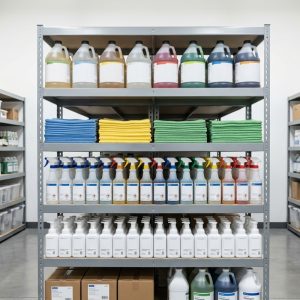
Revisions to Australian Dangerous Goods labelling now treat certain high-alkaline degreasers as Schedule 6 poisons. Workplaces must separate them from acids, provide spill-kit access and record batch numbers for 5 years. The more bulk you carry, the more shelving, bunding and compliance paperwork you need. SafeWork Australia outlines the practical obligations in its latest chemical-handling guidance.
2.3 Sustainability and ESG Reporting
Many Australian businesses are also looking to reduce unnecessary waste. Buying more cleaning supplies than you can use before they expire may result in product waste, while ordering too little can lead to emergency deliveries and higher transport costs. Matching your orders to actual usage helps reduce waste while supporting more sustainable business practices.
2.4 Cash-Flow Priorities
High-interest environments reward lean inventories. A $15 000 pallet of disinfectant ties up cash that could cover wages or new equipment. Dynamic fulfilment splits that liability into bite-sized orders, though per-unit prices may be marginally higher.
3. Bulk vs On-Demand: A Side-by-Side Comparison
The table below summarises how each approach stacks up against the considerations buyers raise most often.
| Decision Factor | Bulk Pallet/Container Orders | On-Demand Replenishment | What to Watch in 2026 |
| Unit Price | Generally 5–15 % cheaper | Higher, but promos offset | Manufacturers shifting to tiered discounts by quarterly volume instead of per order |
| Freight Cost | Single large freight bill | Multiple smaller freight bills | Carbon levies may add a surcharge per trip rather than per weight |
| Storage Space | Requires racking, segregation | Minimal footprint | Landlord audits tightening on chemical storage clauses |
| Waste & Expiry | Higher risk if demand drops | Low risk, you consume quickly | Biodegradable wipes now carry a stricter 12-month shelf life |
| Cash Flow | Capital locked in stock | Pay as you go | Higher rates put pressure on tying up cash in inventory |
| Supply Security | Hedge against shortages | Vulnerable to supplier disruptions | Geopolitical uncertainty keeps import lead times unpredictable |
| Admin Load | Fewer POs, but more stock-take tasks | More POs, automated with software | Procurement platforms now batch recurring SKUs to one invoice |
| ESG Reporting | Fewer freight emissions | Less product waste | Choose the metric that best fits corporate sustainability goals |
4. When Bulk Purchasing Makes Sense
If your business goes through similar quantities of cleaning supplies every month, buying in bulk can reduce costs and minimise the risk of running out. Products commonly purchased this way include:
- Toilet paper
- Paper towels
- Garbage bags
- Hand soap
- Surface disinfectants
- Multipurpose cleaners
4.2 Businesses with Adequate Storage
If you have a dedicated storeroom that meets chemical storage requirements, buying larger quantities can help reduce delivery frequency while keeping essential products readily available.
4.3 Commercial Cleaning Companies
Commercial cleaners servicing multiple clients often benefit from bulk purchasing because many of the same products are used across different sites. Larger orders also make it easier to maintain consistent stock for regular contracts.
5. When On-Demand Makes More Sense
5.1 Small Businesses with Limited Storage
Small offices, cafés and retail stores often have limited storage space. Ordering smaller quantities more frequently helps keep work areas organised without sacrificing access to essential cleaning supplies.
5.2 Businesses Trying New Products
If you’re testing new environmentally friendly products, specialty disinfectants or different paper consumables, buying smaller quantities reduces the risk of investing in products that may not suit your workplace.
5.3 Businesses with Seasonal Demand
Businesses such as hospitality venues or event spaces often experience busy and quiet periods throughout the year. Ordering on demand allows stock levels to better match customer activity.
6. The Hybrid Strategy: Best of Both Worlds?
Many Australian businesses find the best results by combining both purchasing methods.
Purchase high-use products in bulk, including:
- Toilet paper
- Paper towels
- Bin liners
- Hand soap
- Multipurpose cleaners
Order specialist products only when required, such as:
- Carpet stain removers
- Floor finishes
- Graffiti removers
- Food-safe sanitisers
- Washroom fragrances
This approach helps reduce storage requirements while ensuring frequently used products are always available.
6.1 How to Set Hybrid Min-Max Levels
A simple way to build a hybrid purchasing strategy is to:
- Review your cleaning product usage over the past 12 months.
- Identify the products you use every week.
- Purchase those high-use products in bulk.
- Order specialty or seasonal products as needed.
- Review your stock levels every few months to adjust for business growth or changing demand.
For a deeper dive into cost-control levers, see our guide on whether bulk cleaning chemicals save costs for small businesses.
7. Common Stocking Mistakes to Avoid
7.1 Buying More Than You Can Use
Large discounts are tempting, but products that expire before use quickly become wasted money.
7.2 Overlooking Storage Conditions
Some cleaning chemicals require cool, dry storage away from direct sunlight. Always follow the manufacturer’s recommendations.
7.3 Choosing Price Over Compatibility
Cheaper soap refills or cleaning chemicals may not be compatible with existing dispensers or equipment, resulting in unnecessary replacement costs.
7.4 Waiting Until Products Run Out
Leaving orders until the last minute increases the risk of supply delays. Establishing minimum stock levels helps avoid interruptions to daily cleaning routines.
8. Decision-Making Checklist
| Question | Bulk Purchasing | On-Demand Purchasing |
| Do you use the same cleaning products every week? | ✔ | |
| Do you have enough storage space? | ✔ | |
| Are delivery costs a concern? | ✔ | |
| Does your product usage change throughout the year? | ✔ | |
| Are you trialling new products? | ✔ | |
| Do products sometimes expire before you use them? | ✔ |
Use this matrix to score each SKU or supply category, then assign it to bulk, on-demand, or hybrid ordering.
9. FAQs
1. How long can I safely store bulk cleaning chemicals?
Most general-purpose detergents last 24 months if kept between 5 °C and 30 °C, away from direct sunlight. Disinfectants with accelerated hydrogen peroxide or chlorine bleach can degrade faster, sometimes within 12 months. Always check the manufacturer’s SDS and rotate stock, using the oldest drums first.
2. Does buying in bulk void product warranties or certifications?
No, warranty terms apply to the product itself, not the quantity you buy. However, improper storage, decanting, or expired stock can void coverage. Keep original packaging and date-code records as proof of compliance.
3. Are on-demand subscriptions more expensive overall?
Per-unit pricing is usually higher, but savings appear through reduced waste, lower capital tied in stock, and fewer storage-compliance costs. Conduct a total-cost-of-ownership (TCO) analysis over 12 months before deciding.
4. How do I transition from bulk to a hybrid model without supply gaps?
Phase in on-demand ordering as bulk stock reaches its reorder point. Set reorder alerts at 20–30 % remaining. Avoid running stock to zero before the new system stabilises.
5. What technology helps automate on-demand replenishment?
Barcode scanning apps, IoT-enabled dispensers, and API integrations between inventory software and supplier portals can auto-generate purchase orders once preset thresholds are met.
Final Thoughts
Choosing between bulk and on-demand purchasing isn’t about finding a single solution for every workplace. Businesses with predictable usage often save money by buying everyday essentials such as toilet paper, bin liners, paper towels and cleaning chemicals in bulk. Meanwhile, products used less frequently may be better ordered as needed to reduce waste and storage requirements.
For many Australian businesses, a hybrid approach delivers the best balance of cost savings, flexibility and supply reliability. By reviewing your purchasing habits regularly and matching orders to actual usage, you can reduce unnecessary expenses while ensuring your workplace always has the cleaning supplies it needs. Whether you’re managing a commercial cleaning company, office, school, hospitality venue or healthcare facility, a well-planned stocking strategy can improve efficiency and support smoother day-to-day operations.