

















Blog
Cleaning vs Sanitising vs Disinfecting: Choosing the Right Products for Every Surface

If you’ve ever stood in front of a cupboard full of cleaning supplies and wondered what you actually need for a job, you’re not alone. Labels like “sanitiser”, “disinfectant”, “antibacterial”, and “multi-purpose” get used interchangeably, but they don’t mean the same thing in real-world cleaning. When you pick the wrong category—or use the right one in the wrong order—you can waste product, miss the hygiene outcome, and even damage surfaces. In Sydney, this confusion pops up everywhere: office kitchens, cafés, gyms, strata common areas, and home bathrooms during winter cold-and-flu season.
This guide makes it simple:
• What cleaning, sanitising, and disinfecting actually do
• How to choose the right product type (without overdoing it)
• Why contact time matters more than “stronger chemicals”
• A surface-by-surface method you can use immediately
The 15-second rule: what each one is for
Cleaning
Cleaning removes soil: dust, grease, grime, food residue, body oils, and soap scum. A cleaner (often a detergent) lifts that soil so you can wipe or rinse it away.
Why it matters: if the surface is dirty, sanitisers and disinfectants can be blocked by the soil. Dirt acts like a shield.
Sanitising
Sanitising reduces microorganisms to a safer level. It’s commonly used for food-contact surfaces (benches, chopping boards, prep areas) and shared kitchens. Think of sanitising as “making it hygienically safer”, not necessarily eliminating everything.
Why it matters: Sanitising is often the right step when you need better hygiene outcomes without the harshness of full disinfection.
Disinfecting
Disinfecting is for killing a broader range of microorganisms on hard, non-porous surfaces—especially where illness transmission risk is higher (toilets, high-touch points, outbreaks, bodily fluid contamination).
Why it matters: Disinfection is powerful, but it isn’t meant for every surface, every day. Used poorly, it can create irritation, surface damage, and bad habits (like skipping the cleaning step).
The non-negotiable sequence: clean first, then sanitise or disinfect
If you remember one thing, make it this: remove soil first.
A disinfectant can’t do its job properly on a bench covered in grease and crumbs. A sanitiser won’t perform well if it’s applied over sticky residue. Cleaning is the step that removes the barrier.
A practical way to think about it:
• If there’s visible dirt/grease/grime, you’re cleaning first
• If it’s a food-contact surface or you need a hygiene lift, sanitise after cleaning
• If it’s high-risk, high-touch, or a known contamination situation, disinfect after cleaning
For food settings, Food Standards Australia New Zealand explains the clean-then-sanitise approach clearly in their guidance. Use this as a baseline, then follow product label directions for your exact products and surfaces: Food Standards Australia New Zealand cleaning and sanitising guidance
A simple decision tree for everyday use
Ask these questions in order. It keeps your process consistent and stops you from grabbing “whatever’s strongest”.
1) Is the surface visibly dirty, greasy, dusty, or sticky?
• Yes → Clean
• No → Go to question 2
2) Is it a food-contact surface or something that touches mouths/hands often?
• Yes → Clean, then sanitise
• No → Go to question 3
3) Is it a bathroom/toilet area, or a high-touch point with elevated illness risk?
Examples: toilet seats, flush buttons, taps, door handles, lift buttons, shared devices.
• Yes → Clean, then disinfect
• No → Clean only is often enough
4) Is there a specific risk event?
Examples: gastro in the household, a known illness cluster in the office, vomit/diarrhoea, blood, sewage backup.
• Yes → Clean carefully, then disinfect (and consider professional help depending on severity)
• No → Stick to the minimum effective routine
To keep this fast for staff and households, build your process around categories and sequence, not brand names. That’s where a cleaning supplies checklist is genuinely useful—especially when different people rotate through the same space.
Contact time: the most common reason disinfecting fails
Contact time (also called dwell time) is how long a sanitiser or disinfectant needs to stay wet on the surface to work.
The most common failure pattern:
• Spray disinfectant
• Immediately wipe dry
• Assume the surface is disinfected
In reality, many products need the surface to remain wet for a set period (sometimes minutes). Wipe early, and you’ve often just used an expensive cleaner.
Ways to hit contact time without slowing everything down:
• Apply enough product so it stays wet for the required time
• Work in zones (spray one section, move on, come back to wipe)
• Don’t “polish” it dry immediately unless the label says you can
• Swap cloths regularly so you don’t re-smear grime
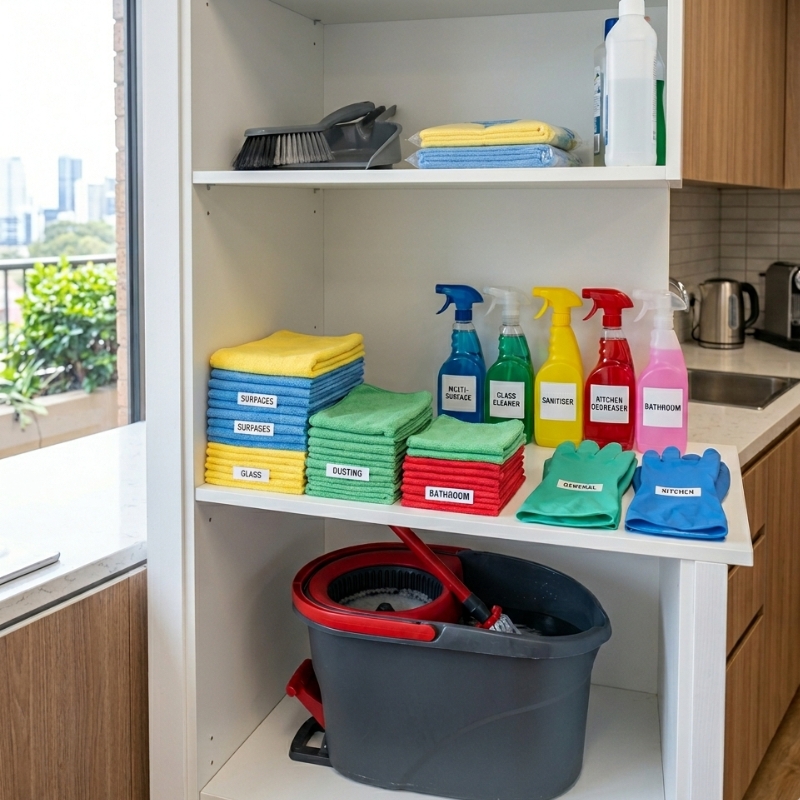
A lean kit that covers most tasks
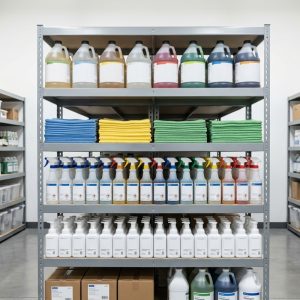
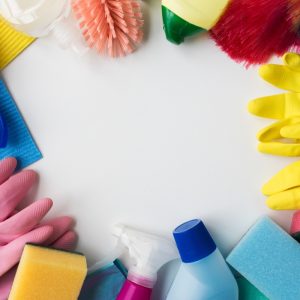
You don’t need a mountain of bottles. Most spaces run well with a small, repeatable kit plus the right tools.
A simple core set:
• General detergent / multi-purpose cleaner
• Degreaser (kitchen)
• Bathroom cleaner (soap scum/mineral build-up)
• Sanitiser (food-contact hygiene step)
• Disinfectant (high-risk areas and touchpoints)
Tools that matter as much as liquids:
• Microfibre cloths (and enough of them)
• A dedicated toilet system (never shared with kitchens)
• A mop system that gets rinsed properly
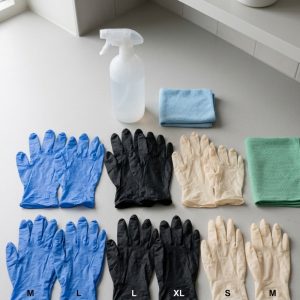
• Gloves where appropriate, plus hand hygiene basics
• Clearly labelled bottles (especially if decanting concentrates)
If you’re trying to make routines consistent across a site, standardising your hygiene cleaning supplies (cloth colours, bottle labels, gloves, and where things live) prevents most “we did it differently” problems.
Surface-by-surface: what to use where
Kitchens (home, office kitchen, café back-of-house)
Kitchens usually need two modes: daily soil removal and food-contact hygiene.
Daily:
• Clean benches, sinks, handles with a detergent cleaner
• Use degreaser on heavy oil zones
Then:
• Sanitise food-contact prep areas after cleaning, especially after raw food handling
Avoid:
• Sanitising over grease or crumbs (it won’t perform properly)
• Disinfecting everything by default (often unnecessary and harsh)
This is where a visible cleaning supplies checklist near the cupboard stops shortcuts—especially the temptation to “skip to disinfectant”.
Bathrooms and toilets
Bathrooms are where disinfecting is often appropriate, but cleaning still comes first.
Routine:
• Clean to remove soap scum and visible residue
• Disinfect high-touch points (flush buttons, taps, door handles)
• Use dedicated toilet tools only
If different people share cleaning, align on the same hygiene cleaning supplies and the same order of steps, so results don’t depend on who’s rostered on.
Offices and shared workspaces
Most offices don’t need full-room disinfection every day. They need:
• Regular cleaning to remove soil and dust
• Targeted disinfection of key touchpoints during higher-risk periods
High-touch points worth prioritising:
• Door handles, lift buttons, reception counters
• Shared printers, meeting room remotes
• Kitchen taps, fridge handles, kettle buttons
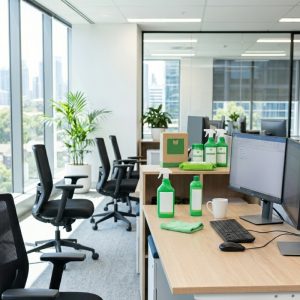
The easiest way to make this repeatable is to define the “touchpoint set” and the products used on it. That’s the role of cleaning supplies for workplaces: fewer decisions, more consistency.
Gyms and studios
Gyms are tricky because you have sweat, high turnover, and lots of hands.
Best practice:
• Clean visible grime regularly
• Disinfect touchpoints (handles, buttons, bench surfaces) with proper contact time
• Rotate clothes and don’t spread residue from one machine to the next
Childcare and schools
General approach:
• Clean first, always
• Sanitise food-contact and high-use surfaces where appropriate
• Disinfect during illness events or where guidance requires it
Colour-coded cloths and consistent hygiene cleaning supplies make a bigger difference here than “upgrading” chemicals.
Q&A: Is sanitiser basically the same as disinfectant?
Not exactly.
• Sanitising generally means reducing microbes to a safer level (often used for food-contact and routine hygiene)
• Disinfecting is typically used for higher-risk situations and broader germ-kill claims on hard surfaces
If you’re unsure:
• Clean first
• Decide based on risk: food-contact hygiene (sanitise) vs high-risk touchpoints (disinfect)
The trap: stronger chemicals don’t fix a weak process
If your team is:
• Wiping too quickly
• Using too little product
• Reusing dirty cloths
• Spreading germs from bathrooms into kitchens
…then swapping to a “stronger disinfectant” won’t fix it.
Three process fixes that beat stronger chemicals:
• Enough clean cloths so you’re not re-smearing
• A clear order: clean → sanitise/disinfect
• Contact time discipline
This is why a cleaning supplies checklist works best when it’s paired with a simple method that everyone follows.
Safe use basics that prevent headaches and damage
• Never mix chemicals (especially anything with bleach unless the label allows it)
• Ventilate small rooms when disinfecting
• Follow label directions and SDS (dilution, contact time, rinse requirements)
• Be careful with delicate surfaces—start gently and test a small area
The minimum effective routine for most Sydney homes and workplaces
Daily:
• Clean kitchens and bathrooms (soil removal)
• Spot-clean spills and visible grime
Several times a week (or daily in busy sites):
• Disinfect key high-touch points
• Sanitise food-contact surfaces as needed
Weekly:
• Check cloth condition, restock, and reinforce contact time habits
• Review your hygiene cleaning supplies so the system stays consistent
FAQ
What’s the main difference between cleaning and disinfecting?
Cleaning removes dirt and grease. Disinfecting aims to kill microorganisms on hard surfaces. Cleaning first improves disinfecting results.
Can I sanitise or disinfect without cleaning first?
You can apply the product, but it may not work well if soil is present. Clean first to remove the barrier.
Do disinfectant wipes work?
They can, but only if the surface stays wet for the required contact time and you use enough wipes to keep it wet.
How do I stop overbuying products?
Think in categories and routines. Start with a cleaning supplies checklist, then add only what your surfaces and risks actually require.
What should I prioritise in a busy workplace?
Consistency:
• Cleaning (soil removal)
• Targeted disinfecting of touchpoints
• Enough cloths to avoid re-smearing
• A stable cleaning supplies for workplaces kit so the method stays consistent