



















Blog
How Can You Maximise Carpet Dryer Uses in Large Facilities?

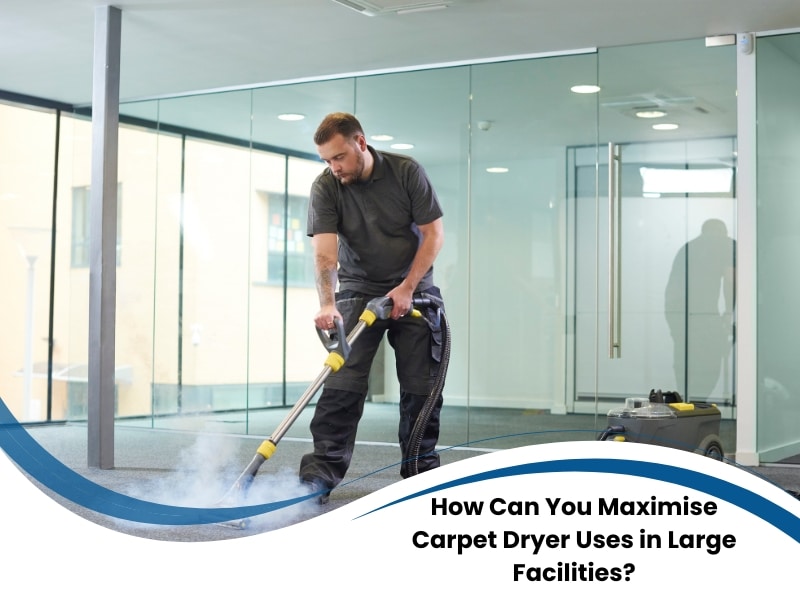
By planning airflow, sequencing runs, and tracking moisture, you maximise results without slowing daily operations. Big sites face constant cleaning, occasional leaks, and pressure to reopen zones fast; that’s where targeted carpet dryer uses make the difference. With the right mix of air movers, dehumidification, and scheduling, carpets dry predictably, walkways stay safe, and tenants stop whingeing about damp smells. Meanwhile, maintenance stays lean because operators reposition units, not themselves, and the gear does the heavy lifting. You’ll also cap energy costs by moving moisture out swiftly instead of letting humidity loiter. This keeps the turnaround snappy and sweet, and avoids drama when storms roll through or deep cleans run long. This article lays out practical tactics for placement, sequencing, ventilation, and upkeep so your team can run a tight ship day in, day out.
How can carpet dryers streamline daily maintenance in extensive facilities?
Carpet dryers streamline routine tasks by shortening dry times and smoothing foot traffic around living areas. In practice, you place units with intent, run timed cycles, and shift airflow zone by zone so custodial rounds stay on schedule. Here are the daily maintenance tactics:
- Corridor angles: Set 15–25° across the pile for faster wicking and a consistent finish.
- Safe cabling: Route leads along walls; add floor covers at pinch points.
- Timed cycles: Match 30–45 minute runs to staff loops for predictable turnover.
- Low-profile units: Use near doors and lifts to keep access free.
- Rotation playbook: Re-angle the closest unit to spills to minimise walking distance.
- Coverage logs: Record square meters per unit to ensure procurement and rostering stay aligned.
For facilities standardising equipment, the choice of gear matters because performance and parts support must withstand daily knocks. When selecting units built for frequent deployment, reliable carpet dryer equipment for commercial facilities anchors consistency across shifts.
Why should you use carpet dryers after deep cleaning or water extraction?
After extraction, moisture hides in the backing and underlay; leaving it to ambient air drags the job out. Purposeful airflow plus humidity control shortens the window where odours and fibre distortion can start. Here are the post-extraction priorities:
- Crossfire pattern: Oppose units to shear boundary layers and kickstart evaporation.
- Walk the room: Airflow toward exits so moist air doesn’t pool.
- Dehumidifier pairing: Remove airborne moisture so you’re not just shifting damp air.
- Edge attention: Flush skirting and corners where moisture wicks upward.
- Verification: Use pinless meters to confirm sub-surface progress before pack-up.
- Furniture pads: Lift contact points; check again after 20 minutes for rebound.
For a practical sequence that blends technique and timing, consider efficient carpet-drying techniques for commercial spaces. Treating extraction and drying as one process keeps you ahead of re-soiling and nuisance odours. Done right, the workflow avoids rework and holds standards even when you’re flat out.
How do industrial air movers improve carpet dryer performance?
Industrial air movers amplify dryer output by stripping saturated boundary layers from fibres. In large footprints, movers act as primaries and carpet dryers as finishers, so coverage is even and quick. Here are the deployment guidelines:
- Spacing: Set movers every 3–5 metres; add a dryer at choke points and doorways.
- Direction: Aim along the yarn twist to boost surface contact and minimise streaking.
- Corners: Use snail shells to punch into pillars and alcoves.
- Clearance: Keep 30 cm from obstructions so intakes breathe freely.
- V-angles: Near entries, angle units to prevent pressure bounce and cold spots.
- Deflectors: Attach for under-bench airflow without moving heavy fixtures.
Quick reference: Airflow coverage by unit type:
| Unit type | Typical coverage (m²) | Best for | Notes |
| Low-profile carpet dryer | 8–12 | Doorways, lifts, narrow runs | Stackable, quieter in public areas |
| Centrifugal air mover | 15–20 | Halls, teaching spaces | High static pressure, corner jets |
| Axial air mover | 20–28 | Long corridors, sports areas | Broad throw distance |
| HEPA dehumidifier (assist) | N/A | Moisture removal | Pair to stabilise RH < 60% |
Keep an eye on intake hygiene; blocked filters can significantly impede airflow and disrupt day-to-day operations during peak traffic. In tandem, movers and dryers stabilise the first critical hour after wet work and prevent mould growth by denying microbes a comfy window.
Which carpet dryer uses can help prevent mould and odour in large buildings?

Prevention hinges on timing, airflow, and ventilation. Treat humidity as a moving target and intervene before moisture camps in carpet backing or underlay. Here are the prevention tactics:
- After-hours pulses: Run short cycles post-clean in humid months to purge residual moisture.
- Corner flushes: Lift furniture edges and drive airflow through dead zones.
- Weekend deep-dry: Target gyms, changerooms, and food-court edges where sweat and spills linger.
- Sensor cues: Trigger runs from RH or CO₂ readings to avoid guesswork.
- Vent staging: Open leeward doors/windows where secure to push humid air out.
- Odour check: Audit drains and plant rooms; they harbour moisture and smells.
Building ventilation supports health, energy, and drying efficiency. For a clear primer, learn why proper ventilation supports healthier indoor air quality.
Can scheduling carpet dryer uses reduce facility downtime?
Scheduling is where drying meets operations. By matching power availability and occupancy patterns, you protect public areas while keeping cleaners moving. Here are the scheduling moves:
- Heat-map planning: Prioritise high-traffic zones for after-hours high-velocity runs.
- Noise zoning: Reserve quieter units for libraries, clinics, and meeting rooms.
- Stagger starts: Offset each unit by 60–90 seconds to smooth demand charges.
- Clockwise batching: Move crews in one direction to cut backtracking and trip risks.
- Storm slots: Hold response windows in the wet season; pre-stage units near entries.
- Seasonal tweaks: Adjust rosters to accommodate summer humidity and winter condensation.
During peaks, run finishing passes and spot drying; during troughs, run full-velocity movers with dehumidification. Misaligned starts drive up energy bills, so spacing activations keeps costs tidy and the whole box and dice running smoothly.
How often should you service or replace carpet dryer parts?
Maintenance is the quiet multiplier. Clean intakes, sound bearings, and healthy cords mean stronger throughput and fewer surprises mid-shift. Here are the maintenance checkpoints:
- Daily wipe-downs: Clear lint from grilles; confirm feet and handles are tight.
- Quarterly bearings: Spin-test for roughness; replace before heat rises.
- Electrical safety: Test GFCI leads monthly; retire any warm or loose plugs.
- Filter routines: Swap or clean on schedule; blocked intakes sap airflow.
- Service logs: Use a QR tag to record each unit’s run hours and interventions.
- Spares kit: Stock feet, switches, capacitors, and handles for standard models.
If the extraction gear underperforms, drying stalls even with strong airflow. For issues like spray loss, pulsation, or nozzle clogs, consult a professional to troubleshoot carpet-extractor spray problems in cleaning. Proactive swaps extend equipment lifespan and reduce noise creep, indicating airflow loss.
Final thoughts on maximising carpet dryer uses in commercial spaces
Maximising carpet dryer performance isn’t guesswork; it’s placement, sequencing, ventilation, and upkeep working together. Use movers to open fibres, dryers to finish, and dehumidification to lock in results. Track RH, log dry times, and schedule runs around people and power so operations stay calm. For site-specific guidance and next steps that fit your roster, learn how AC Cleaning Supplies helps streamline facility upkeep. With consistent practices in place, turnaround tightens, complaints ease, and facilities hum along, tidy as.