




















Blog
How to Choose Compatible Trigger Sprayers for Different Cleaning Chemicals

When it comes to cleaning performance, the formula is only half the story—spray bottles and triggers do the rest of the heavy lifting. A strong cleaner isn’t much use if the sprayer fails halfway through the job. The most common “mystery” problems—stiff triggers, dribbly nozzles, leaks around the neck, swollen seals, brittle dip tubes, or cracked bottles—usually come down to one thing: chemical compatibility.
Choosing the right setup isn’t about buying the biggest trigger head you can find. It’s about matching what you’re spraying (and how you’re storing it) to the bottle plastic, the trigger body, the seals inside the trigger, and the nozzle style. In Sydney, that matters even more when bottles live in hot garages, vans, or storerooms where heat speeds up wear.
This guide will help you:
• Identify the chemical type you’re working with
• Understand what parts of a trigger are most likely to fail
• Choose bottle and seal materials more confidently
• Decant, label, and store more safely
• Spot early warning signs before a small leak becomes a safety incident
Know what you’re actually spraying (don’t guess from the smell)
Compatibility starts with identifying the chemical “family”. You don’t need to be a chemist—you just need to know the broad type so you can avoid obvious mismatches.
Common cleaning chemical families include:
• Oxidisers (often bleach-based disinfectants)
• Alkalines (degreasers, many heavy-duty cleaners)
• Acids (descalers, some bathroom acids)
• Solvents (citrus blends, alcohol blends, solvent-based spotters)
• Quats (quaternary ammonium disinfectants—common in commercial settings)
• Neutral detergents (many general-purpose cleaners)
If you’re using chemicals at work, your Safety Data Sheet (SDS) is the most reliable reference for hazards, PPE, handling, and any notes about materials or application methods. For household products, follow label directions and don’t mix chemicals “because it works faster”.
Quick Q&A: Can I just try a sprayer and see if it survives?
You can trial, but do it carefully because failures can be sudden (and leaks are a safety issue, not just annoying). If you’re testing a new chemical/sprayer combo:
• Start with a small volume
• Check at 1 hour, 24 hours, and 7 days
• Look for swelling, softening, brittleness, cracking, or leaks
• Stop immediately if you see changes
Why triggers fail: the parts that react first
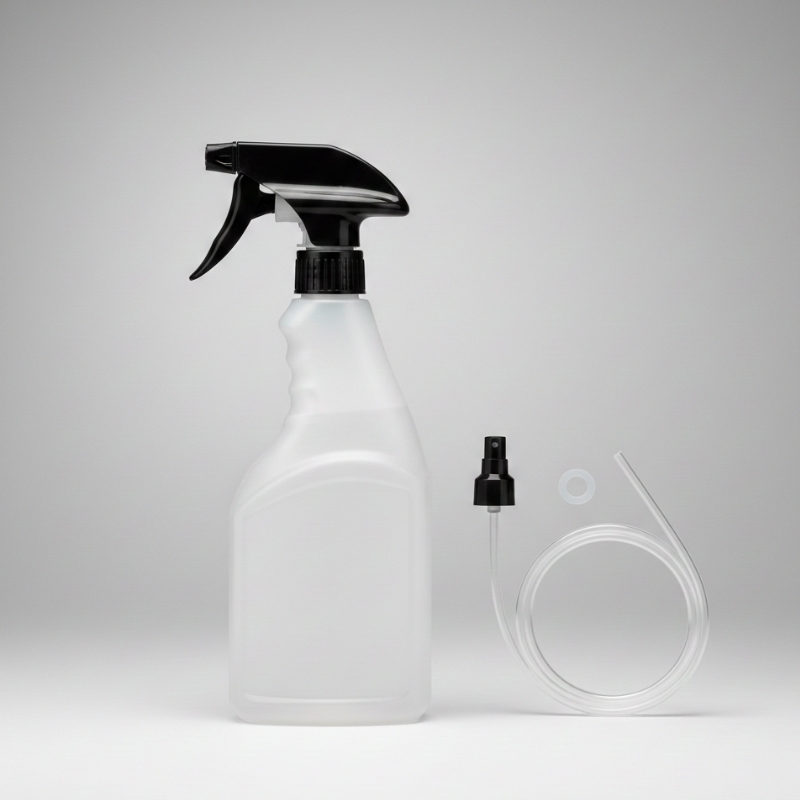
A trigger sprayer is a small pump system. Different chemicals attack different parts.
Components that matter most:
• Bottle (often HDPE or PET)
• Trigger body (commonly polypropylene/PP)
• Dip tube (draws chemical up)
• Seals/O-rings (often EPDM or FKM/Viton in chemical-resistant options)
• Spring/valves (metal exposure varies by design)
• Nozzle tip (mist/stream/foam and how easily it clogs)
Most day-to-day failures start in the trigger head (seals swelling, valves sticking, dribbly shut-off). Bottles tend to fail when a chemical stresses the plastic (stress cracking), when the bottle is exposed to heat/UV, or when solvent-type products slowly weaken the material.
Bottle material: HDPE vs PET in real-world cleaning use
Two common bottle plastics you’ll see in cleaning are:
• HDPE (high-density polyethylene): widely used for chemicals and generally more tolerant
• PET (polyethylene terephthalate): clear and rigid, but can be more sensitive to certain products—especially some solvent profiles
Practical rule of thumb:
• If you’re dealing with stronger chemicals or you’re unsure, HDPE is usually the safer direction than PET.
• If you want a clear bottle for visibility, be extra cautious and verify suitability first.
Sydney-specific reality check: a bottle left in a van or hot garage can heat up quickly. Heat doesn’t just increase pressure; it can also speed up degradation and make small compatibility issues show up sooner.
Quick Q&A: Is it safe to reuse drink bottles for cleaning chemicals?
It’s not recommended. It increases the risk of accidental ingestion and confusion, and the plastic isn’t designed for chemical use, sealing, or safe labelling. Purpose-made bottles are made to be filled, labelled, handled, and stored properly.
Trigger heads: seals and internal design matter more than “heavy-duty” labels
When you see “chemical resistant” on a trigger, it usually points to upgraded seals and/or an internal design that reduces vulnerable metal contact. That’s important because seals are often the first point of failure.
What to look for when chemicals are involved:
• Seals designed for harsher chemical exposure (material matters)
• A trigger design that protects the spring/metal components from direct contact
• A valve system that can handle residues or thicker products if needed
• A nozzle output that suits the task and reduces drift
EPDM vs FKM/Viton seals (simple guidance)
Seal material is where compatibility becomes practical.
General guidance (always verify with SDS/supplier guidance):
• EPDM often suits many water-based cleaners and some disinfectant profiles, but may not like certain oils/solvents.
• FKM/Viton is often selected where stronger solvent resistance is needed and for harsher environments, but may be unnecessary for mild solutions.
If you’re unsure, treat “unknown concentrate” as higher risk and choose a purpose-designed chemical-resistant option rather than a generic trigger.
Quick Q&A: Why did my trigger go stiff after a few days?
Common causes:
• Seal swelling from incompatibility
• Valve sticking due to residue or viscosity
• Crystallisation/deposits as product dries in the nozzle
• Debris clogging the nozzle or filter screen (if present)
A stiff trigger is often an early warning sign. If it’s compatibility-related, it typically gets worse over time.
Mist vs stream vs foam: pick the safest control for the space
Output style affects both performance and exposure risk.
General guidance:
• Mist: good coverage but more airborne drift—be cautious in small rooms
• Stream: more targeted, less drift—often easier to control
• Foam: clings to vertical surfaces—useful where you want dwell time with less run-off
In confined spaces (bathrooms, laundries, small storerooms), controlling drift matters. If you can smell fumes strongly or feel irritation, stop and improve ventilation and PPE rather than pushing through.
Decanting chemicals safely: the habits that prevent incidents
Compatibility isn’t the only risk. Decanting and storage mistakes cause many of the “how did this happen?” moments—especially when multiple products are used across a home, site, or facility.
Safer decanting habits:
• Decant in a well-ventilated area
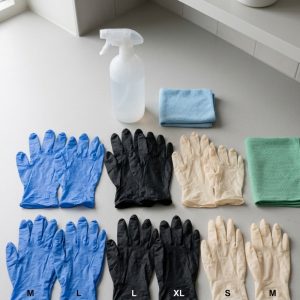
• Wear PPE appropriate to the chemical (as per SDS)
• Use a funnel or controlled pour to reduce splashes
• Never mix chemicals in a bottle “to save time”
• Keep containers closed when not in use
• Store away from heat and direct sun (especially in vehicles)
Labelling in Australia (practical and clear)
If you decant a hazardous chemical into a secondary container at work, it still needs clear identification so nobody is guessing what’s inside. Safe Work Australia provides guidance on hazardous chemical labels and what information is expected. Simple labelling tips that reduce risk:
• Use large, legible text
• Put the product name and key hazard info where it’s easy to see
• Add dilution ratio and date mixed (if applicable)
• Don’t rely on colour-coding alone—always include words
A practical “before you fill it” compatibility checklist
Use this quick check before committing a chemical to a sprayer.
1) Confirm the chemical type
• Oxidiser, acid, alkaline, solvent, quat, or neutral detergent?
• Check the SDS/label for warnings, handling, and PPE
• Confirm whether it’s ready-to-use or a concentrate
2) Choose a suitable bottle
• Prefer purpose-made chemical bottles (often HDPE) for stronger chemicals
• Avoid food/drink containers
• Check for existing stress marks, whitening, or cracks—especially near the neck
3) Choose a suitable trigger
• Look for chemical-resistant seals and a design suited to harsher products
• Match the nozzle output to the environment and task
• Ensure the closure/neck fit is correct to prevent thread leaks
4) Factor in Sydney heat and storage
• Hot vans/garages accelerate failures and can increase internal pressure
• Store upright, secured, and out of direct sun
• Inspect more frequently when heat exposure is unavoidable
5) Trial safely if unsure
• Small volume, short intervals, documented checks
• Stop at the first sign of swelling, leaks, cracking, or brittleness
Warning signs you’ve got a compatibility problem
If you spot any of these, assume incompatibility until proven otherwise:
• Trigger becomes stiff, sticky, or doesn’t return smoothly
• Seals feel spongy or appear swollen
• Nozzle dribbles or won’t shut off properly
• Bottle shows fine cracks, whitening, or stress lines (often near the neck)
• Dip tube turns cloudy, brittle, or deforms
• Discolouration or corrosion around any exposed metal component
Quick Q&A: If the bottle is fine, can I replace only the trigger head?
Often yes—if there’s no sign of stress cracking and the issue is clearly in the trigger (stiff action, leaking nozzle, swollen seals). But if the bottle shows cracking or whitening, replace the bottle as well and reassess the chemical family and storage conditions.
Common chemical scenarios and what to prioritise
These are practical starting points. Always check SDS guidance and supplier compatibility information for the exact product you’re using.
Disinfectants and oxidisers (including bleach-based products)
Key concerns:
• Faster wear in seals and internal components
• Potential corrosion issues depending on design
• Heat and sun can accelerate degradation
What to prioritise:
• A trigger built for chemical exposure with a suitable seal material
• A suitable bottle material for oxidisers
• A controlled output to reduce drift
If you’re setting up disinfectant bottles for regular use, it’s worth starting with purpose-built chemical-resistant spray bottle options rather than generic bottles that may fail early.
Strong alkalines and degreasers
Key concerns:
• Seal fatigue over time
• Valve sticking where products leave residue or are thicker
What to prioritise:
• Chemical-resistant seals
• A consistent flushing routine (especially if product dries tacky)
Acidic bathroom/descaling products
Key concerns:
• Material sensitivity and faster wear when mismatched
• Splash risk and fumes in tight spaces
What to prioritise:
• Controlled application (often stream over fine mist indoors)
• Dedicated, clearly labelled bottles to prevent dangerous mix-ups
Solvent-containing products
Key concerns:
• Stress cracking in some plastics
• Seal swelling depending on elastomer type
• Stronger fumes and exposure risk
What to prioritise:
• Caution, small-batch trial, and verified materials
• Storage away from heat and direct sun
Make it workable day-to-day: consistency, comfort, and fewer surprises
Even a compatible sprayer can be frustrating if it’s uncomfortable or inconsistent—especially for cleaners, tradies, or facility teams doing repeated applications.
Practical selection factors that matter:
• Consistent output (less rework and over-application)
• Comfortable trigger pull (less hand fatigue)
• Correct thread fit (reduces slow leaks at the neck)
• Easy-to-clean nozzle (reduces clogs)
If you want a reliable, standardised setup across different tasks, starting from a curated range of high-quality spray bottles and triggers makes it easier to keep parts compatible and labels consistent.
Maintenance that extends sprayer life and reduces cross-contamination
A few small habits can significantly extend trigger life—especially when changing products.
Simple routine:
• Flush with clean water when changing chemicals
• If a product crystallises or dries tacky, flush at the end of the day
• Wipe the neck/threads before tightening to prevent slow leaks
• Store upright; keep nozzles in “off” position if available
• Inspect weekly in commercial use: seals, dip tube condition, nozzle performance
Quick Q&A: Can I rinse and reuse the same bottle for different chemicals?
Sometimes, but it increases cross-contamination risk. The safer approach is dedicated bottles per chemical class, clear labels, and a consistent system. If you’re building a dedicated kit, standardising your spray bottles for cleaning helps reduce mistakes and makes training easier.
FAQ
Which trigger sprayer is safe for bleach-based disinfectants?
Use a trigger designed for chemical exposure with suitable seals and a bottle material compatible with oxidisers. Heat and sun can accelerate failures, so storage matters as much as the trigger itself.
What does “chemical resistant” mean in practice?
It usually means upgraded seal materials and/or an internal design intended to handle harsher chemical exposure. It is not universal—compatibility depends on the chemical type, concentration, temperature, and how long the chemical sits in the sprayer.
Why is my bottle cracking near the neck?
That pattern commonly points to stress cracking from incompatibility, heat exposure, overtightening, or impact damage. Stop using the bottle, review the chemical type, and switch to a more suitable bottle material.
Is misting chemicals always a bad idea?
Not always, but mist increases airborne drift. In small bathrooms or poorly ventilated areas, a more controlled spray can reduce exposure risk. Follow the SDS and use appropriate ventilation and PPE.
Do I need to label a decanted bottle in Australia?
For hazardous chemicals in workplaces, clear labelling is expected so people know what’s inside and how to handle it. Refer to recognised guidance, such as Safe Work Australia, and keep SDS information accessible.