



















Blog
Commercial Kitchen Cleaning: Choosing the Right Chemical for Each Task

Introduction
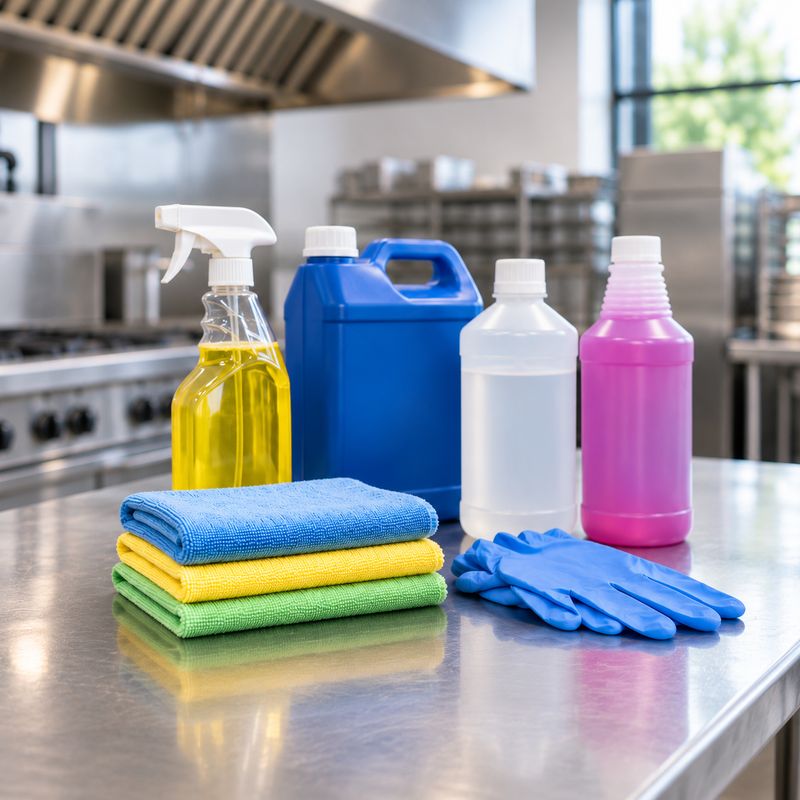
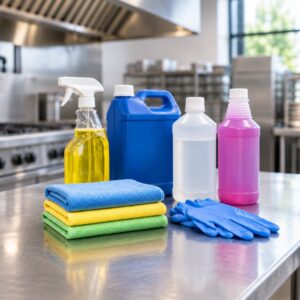
Walk into most kitchens at the end of service and you will find one spray bottle doing everything. It travels from the cooktop to the prep bench to the floor, and it fails on both counts. A product built to cut carbonised fat is the wrong choice for a surface that food sits on, and a product mild enough for a bench will barely touch a grill. The bottle and the cloth also carry soil from the dirtiest surface in the kitchen to the one that matters most.
This article sets out which chemical type does which job, the order those jobs go in, and how to build a short list of restaurant cleaning supplies that covers a working kitchen without doubling up.
Four chemical types do all the work
Almost everything a kitchen needs falls into four groups, and the range of kitchen cleaning chemicals you end up buying is really just a choice within each one.
Degreaser. Built for carbonised fat, baked-on oil and the film that settles on everything near the cooking line. It is a heavy-duty soil remover, not a sanitiser, and it is not intended for routine use on surfaces that food touches unless its own label says so.
Detergent. The general-purpose soil remover and the step everything else depends on. Detergent lifts food residue, grease films and dirt so that what follows can reach the surface. Skip it and the rest of your routine is working on top of a layer of soil.
Sanitiser. Reduces microorganisms on a surface that is already clean. It is not a cleaner. Applied to a greasy bench it has very little to work with, and it is not a substitute for degreaser any more than degreaser is a substitute for it.
Specialist products. The jobs the first three cannot do: oven and grill cleaners, machine dishwash and glasswash detergent with its matching rinse aid, drain and grease-trap treatments, and descaler for hard-water scale. Each is built for one task and is worth buying as the task demands rather than keeping a shelf of products nobody uses.
Clean first, sanitise second: the order that actually matters
Sanitiser applied to a dirty surface achieves very little, and this is the single most useful thing to get right. Soil shields the surface underneath it, so the product never reaches what you are trying to treat. The soil also consumes the sanitiser as it goes, which means the bench looks wet, smells clean and is neither.
The routine is two steps, always in the same order. First, remove the soil with detergent, or with degreaser where the soil is baked-on fat. Rinse if the product you are using calls for it. Second, apply sanitiser to the now-clean surface and leave it there for the period its own label specifies, rather than wiping it straight off.
That last point is where most kitchens lose the benefit. Sanitiser needs time on the surface to do anything, and the time varies by product, so read the label of the product in your hand rather than working to a number somebody remembers from a previous job. The same goes for whether a rinse is required and whether the product suits food-contact surfaces at all.
Work by zone, because a kitchen is not one surface
A commercial kitchen is four or five different cleaning problems sharing a room. The soil is different in each, the risk is different in each, and so is the product. Setting your routine up by zone is what stops one bottle being asked to do five jobs. The colours below are one common convention and are offered as an example, not a rule.
| Zone | Chemical type | Cloth colour | Frequency |
| Cooking line, grills, extraction | Degreaser, oven and grill cleaner | Red | Daily, with filters and canopies on a schedule |
| Prep benches and food-contact surfaces | Detergent, then sanitiser | Green | Between tasks and after every service |
| Dishwashing, glasswashing, sinks | Machine detergent and rinse aid, descaler, glass sanitiser | Yellow | Daily, descale as water hardness demands |
| Floors, drains, grease traps | Grease-capable floor cleaner, drain treatment | Red | Floors daily and last, drains on a schedule |
| Front of house | General-purpose cleaner, glass cleaner, table sanitiser | Blue | Through service and at close |
Cooking line, grills and extraction
This is the heaviest soil in the building and the only zone where you are routinely dealing with carbonised fat. Degreaser does the daily work, with an oven and grill product for the baked-on build-up that degreaser will not shift. Let hot surfaces cool first: a product hitting a hot plate flashes off before it can work, and it puts fumes into the face of whoever is holding the bottle. Many of these products are caustic, so cleaning gloves and protective wear are a practical necessity. Extraction canopies and filters are a scheduled job rather than a nightly one.
Preparation benches and food-contact surfaces
This is the zone where the two-step routine matters most. Detergent first to remove the residue, then sanitiser on the clean surface. Cloths here need a dedicated colour that never leaves the zone, because one that has been near the cooking line or the floor undoes the whole exercise. Check that the product suits food-contact surfaces according to its own label, including whether it needs a rinse before the surface goes back into use.
Dishwashing, glasswashing and sinks
Machine detergent and rinse aid are one system, not two purchases. The detergent cleans and the rinse aid controls drying, and mismatching them is what produces film, spotting and complaints about glassware. Where your water is hard, a descaler keeps the machine working and protects the elements. A glasswasher usually wants a glass-specific product rather than the plate detergent. Hand-wash basins are a separate line item: hand soap is not kitchen detergent and should not share a dispenser.
Floors, drains and grease traps
Kitchen floors carry grease, which makes the product choice a safety decision as much as a cleaning one. You want a floor cleaner that lifts grease without leaving a film, because a residue underfoot is a slip hazard in a room full of hot pans. It is worth reading our guide on how to reduce slip risk after floor cleaning before you settle on a product. Drains and grease traps are treated on a schedule rather than when the smell arrives. Floors are cleaned last, after the benches and the line, so nothing lands on a surface you have finished.
Front of house
The lightest zone: a general-purpose cleaner, a glass cleaner, a table sanitiser, plus serviettes and washroom consumables, which sit alongside the rest of your catering and hospitality supplies. Front-of-house cloths are a separate colour again, and they stay out of the kitchen.
Colour-coding is what keeps the system honest
Everything above depends on cloths and bottles staying where they belong, and in a kitchen that is harder than anywhere else. Staff move fast, the zones are metres apart, and a cloth picked up without thinking is the quickest way to carry grease and bacteria from the line to the bench. A colour-code is the only control that works at service pace, because it needs no reading and no decision.
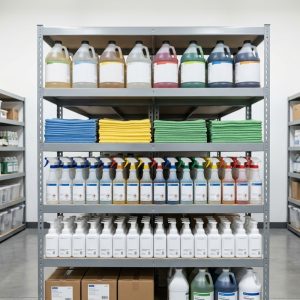
The specific colours matter far less than everyone using the same ones. Whether your prep cloths are green or blue is irrelevant as long as every person on every shift knows which colour belongs to which zone and nobody is improvising. Pick a set, apply it to cloths, buckets and spray bottles alike, and keep it stable even when a delivery arrives in the wrong colour.
Write the code up where people can see it, near the chemical store or the sink rather than in a folder in the office. A code that lives only in an induction is a code that lasts a fortnight. New staff, casuals and agency cover should be able to work it out from the wall in a few seconds.
Building a short product list
You do not need a chemical background to put this together. Work through it in order.
- List your zones. Most kitchens have four or five, and a venue with a bar or a function room may have six.
- Pick one detergent and one sanitiser for food-contact work. These two cover the prep benches and most of the daily routine, and they are the products you will buy most often.
- Add a degreaser for the cooking line, plus an oven and grill product if you have a griller, a combi or a salamander that builds up carbon.
- Add machine products as a matched system: dishwash detergent with its rinse aid, a glasswash product if you run a separate machine, and a descaler if your water is hard.
- Add floor and drain products, choosing a floor cleaner that handles grease without leaving a slippery film.
- Check every label against the zone it will be used in, particularly anything going near food-contact surfaces, and confirm the sizes suit your storage and the way you decant.
What to check before you order
- Every product used near food-contact surfaces is suitable for that use according to its own label.
- Machine detergent and rinse aid are compatible with each other and with your machine.
- The degreaser suits the surfaces on your cooking line and the metals they are made of.
- A colour-code exists, is agreed and is displayed where staff work.
- Gloves and protective wear are on hand wherever caustic products are used.
- Bulk sizes suit your storage space and the way your team decants and labels bottles.
Conclusion
Most of the benefit here comes from two ideas. Clean before you sanitise, because a sanitiser on a soiled surface is doing almost nothing. And buy by zone, because the cooking line, the prep bench, the machines and the floor are four different problems that one bottle cannot solve. Get those right and the list stays short, the routine is quick enough to survive a busy service, and your staff are not guessing.
If you would like a short product list put together for your kitchen, you can see the range on our restaurant cleaning supplies page and ask us for a quote.
Related Posts
Cleaning Gym Equipment Without Wrecking It: What’s Safe on Vinyl, Foam and Chrome

Commercial Kitchen Cleaning: Choosing the Right Chemical for Each Task
How Much Washroom Stock Does Your Site Actually Need? A Headcount Method
Floor Pad Colour Codes Explained: Which Pad for Which Job
Choosing a Backpack Vacuum for Commercial Sites: Weight, Filtration and Run Time
Jumbo vs Standard Toilet Roll Systems: Which Suits Your Washroom
Choosing a Commercial Dustpan and Brush That Actually Lasts
Foaming vs Liquid Hand Soap: Which Is Better for Busy Workplace Washrooms?

How to Use a Window Squeegee for Streak-Free Windows

How Long Does an Air Freshener Refill Really Last in Busy Workplaces?
Choosing the Right Cleaning Glove Size and Thickness to Keep Work Moving
Which Cleaning Items Actually Cut Your Monthly Budget in 2026?